
Overview of the CVD Tube Furnace
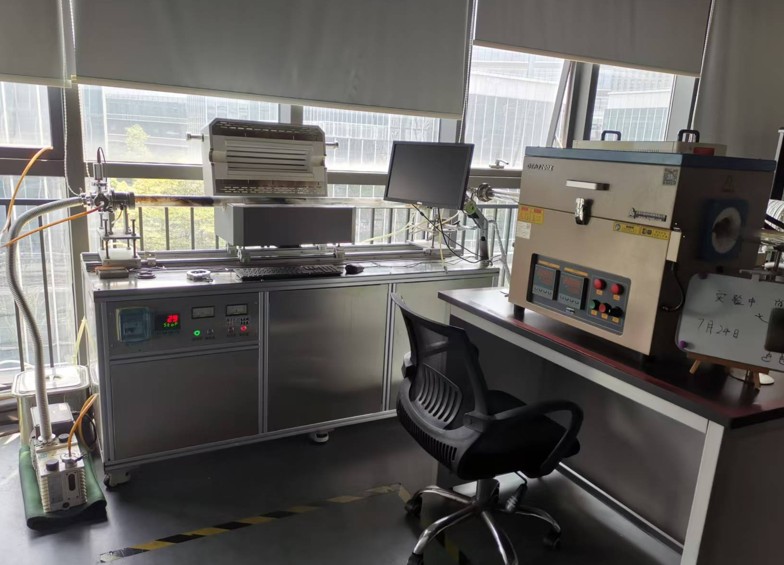
A CVD tube furnace is an extremely powerful device for material preparation and thermal processing.
Its core principle is the following: under a high-temperature, atmospheric or low-pressure inert or reactive gas environment, gaseous precursors undergo chemical reactions (such as pyrolysis, reduction, oxidation, etc.). The resulting solid material then deposits on the surface of substrates (e.g., silicon wafers, quartz plates, foils), forming thin films or powder materials.
Thanks to its precise temperature control (typically up to 1200°C or even higher), flexible atmospheric environments (vacuum, inert gases, reactive gases), and open sample-loading structure, it can support a wide variety of experiments.
Below are the major experiment categories that a CVD tube furnace can perform, together with specific examples.
1. Thin Film Material Preparation (Core Application)
This is the most classic and widely applied function of a CVD tube furnace, mainly used to grow high-quality thin films on various substrates.
Graphene Preparation
Method: Typically, methane (CH₄) is used as the carbon source. Under high temperature (around 1000°C), a mixed H₂/Ar atmosphere is introduced, where methane decomposes and deposits on metal catalytic substrates (such as copper or nickel foil), forming single-layer or multi-layer graphene.
Variation: It can also produce graphene oxide (GO) or reduced graphene oxide (rGO).
Growth of Carbon Nanotubes (CNTs) and Carbon Nanofibers (CNFs)
Method: Hydrocarbon gases (such as acetylene or ethylene) are used as carbon sources. In the presence of catalyst nanoparticles (Fe, Co, Ni) on the substrate, carbon nanotube arrays or films “grow” through the CVD process.
Synthesis of Two-Dimensional Materials (2D Materials)
Examples: Molybdenum disulfide (MoS₂), hexagonal boron nitride (h-BN).
Using precursors (e.g., MoO₃ as the molybdenum source and sulfur powder as the sulfur source), thin 2D layers are deposited on substrates under precise temperature and atmosphere control.
Transparent Conductive Oxide (TCO) Films
Examples: ITO, FTO, ZnO.
Metal-organic precursors (e.g., indium acetylacetonate) or halide sources decompose oxidatively at high temperature and deposit on glass substrates, used for solar cells, touch screens, etc.
Semiconductor Thin Films
Examples:
- Silicon (Si) thin films: Silane (SiH₄) decomposition to deposit polysilicon or amorphous silicon thin films.
- Gallium nitride (GaN): Used in LEDs and power electronics (commonly grown by MOCVD, a specialized CVD form).
Dielectric Films
Examples: SiO₂, Si₃N₄.
Silane reacts with oxygen or nitrogen to form oxide or nitride layers for insulation and passivation in semiconductor processes.
2. Powder and Nanomaterial Synthesis
Powder precursors or catalysts are placed in a quartz boat, and reactive gases are introduced to synthesize nanomaterials at scale.
Nanoparticle Synthesis
Examples: metal nanoparticles (Ag, Cu), oxides (TiO₂, ZnO), sulfides (CdS).
1D Nanomaterials
Beyond CNTs, nanowires such as silicon nanowires and ZnO nanowires can be grown.
Material Coating (Coating Treatment)
For example, depositing a uniform Al₂O₃ coating on lithium battery electrode materials to enhance electrochemical performance and stability.
3. Material Thermal Treatment and Modification
Using precise temperature and atmosphere control, various post-processing treatments can be performed.
Annealing (Heat Treatment)
- Improve crystal quality: relieves internal stress and increases crystallinity.
- Dopant activation: allows dopant atoms to occupy lattice positions, enabling electrical activity.
- Phase transformation studies: observing structural changes under different temperatures.
Oxidation
Introducing O₂ or air forms oxide layers. A classic example is thermally growing SiO₂ on silicon wafers.
Reduction
Introducing H₂ or H₂/Ar reduces metal oxides to metals (e.g., CuO → Cu).
Carburization / Nitridation
Introducing carbon-containing gases (e.g., CH₄) or nitrogen-containing gases (NH₃) forms carbide or nitride layers, significantly enhancing hardness and wear resistance.
Sintering
Ceramic or metal powder compacts can be sintered under protective atmospheres (Ar, N₂) to densify into solid components while preventing oxidation.
4. Other Specialized Applications
CVD Diamond Film Preparation
Under specific conditions (H₂ + carbon-containing gases), diamond films can be deposited on non-diamond substrates.
Chemical Vapor Infiltration (CVI)
Used for producing ceramic matrix composites (CMCs) or carbon-carbon composites.
Reactive gases infiltrate porous preforms and deposit internally, reinforcing the material.
Summary Table
| Experiment Category | Specific Examples | Key Atmosphere / Precursors |
|---|---|---|
| Thin Film Preparation | Graphene, CNTs, MoS₂, ITO, SiO₂ | CH₄, C₂H₂, H₂, Ar, O₂, metal-organic sources |
| Powder Synthesis | Nanoparticles (TiO₂), nanowires, material coating (Al₂O₃@NCM) | Metal salt vapors, O₂, NH₃, TMA |
| Thermal Treatment / Modification | Annealing, oxidation, reduction, nitridation, sintering | Ar, N₂, O₂, H₂, air |
Important Notes
- Safety first: CVD experiments often involve flammable (H₂, CH₄), toxic (CO, SiH₄), and corrosive (Cl₂, HCl) gases. Proper leak testing, ventilation (fume hood), and exhaust treatment are essential.
- Precise matching of temperature and atmosphere: Different materials require specific temperature windows and gas ratios. Literature review is necessary to optimize recipes.
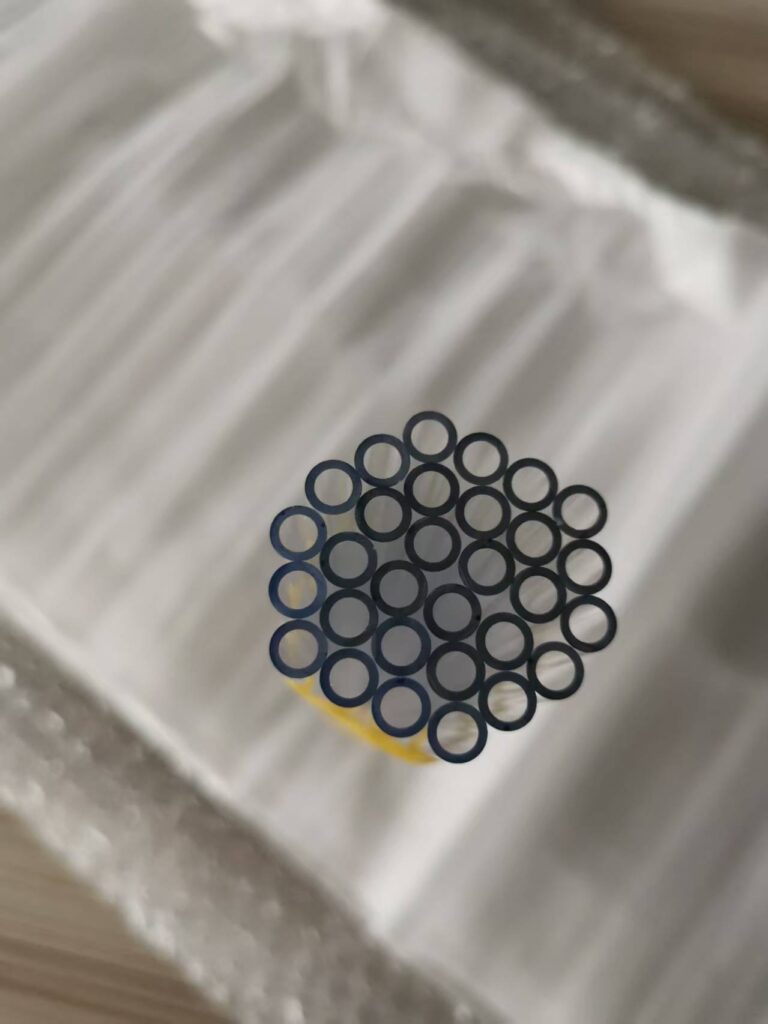
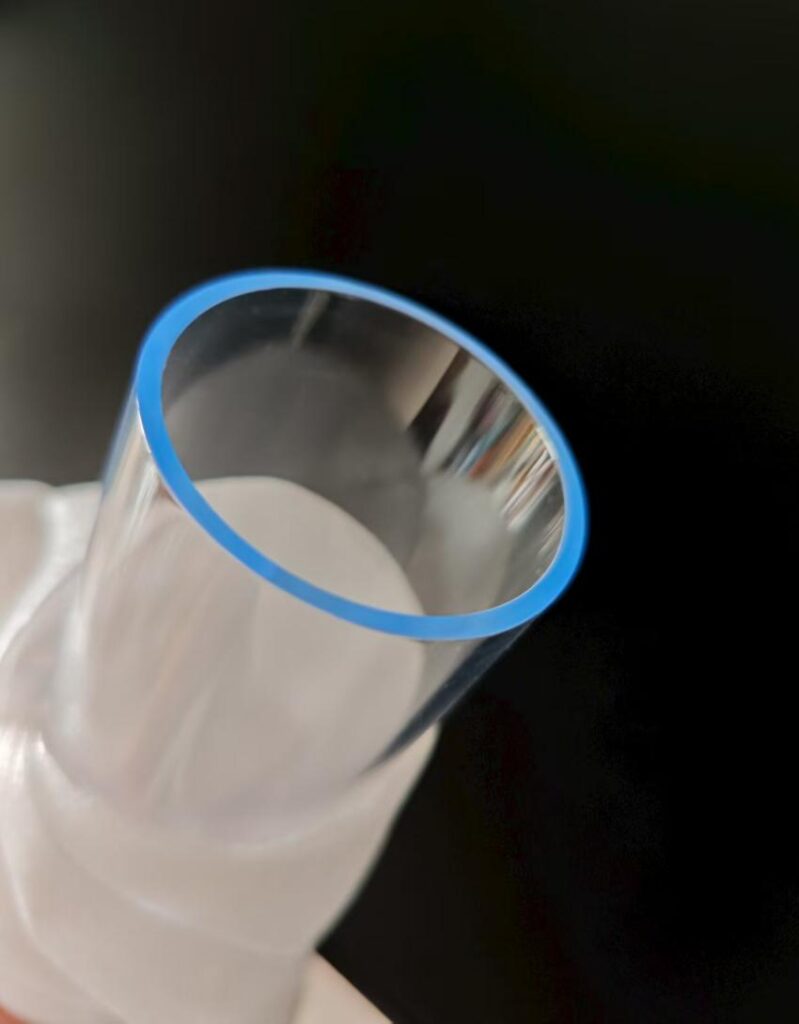
- Compatibility of substrates and quartz boats: Ensure substrates (such as copper foil) and quartz boats do not react with process gases at high temperature.
Conclusion
A CVD tube furnace is one of the most versatile tools in materials science, chemistry, physics, microelectronics, and nanotechnology research.
Its application range is limited only by the imagination of the researcher.

 English
  German
  Russian
  French
  Spanish
  Italian