
Fiber-optic-grade capillary quartz tubes represent the “top-tier products” among all capillary quartz tubes. Their tolerance control reaches an extreme level and stands as a benchmark in precision manufacturing. This level of control does not rely on a single step; instead, it is achieved through a tightly linked “combination system” of multiple processes.
Below are the core technologies and steps behind how these tubes achieve such tight tolerances.
Source Control: Ultra-High Purity and Uniformity of the Preform Rod
This is the foundation of the entire process. Fiber-optic-grade capillary tubes are typically made from synthetic fused silica produced by the vapor deposition method.
Principle:
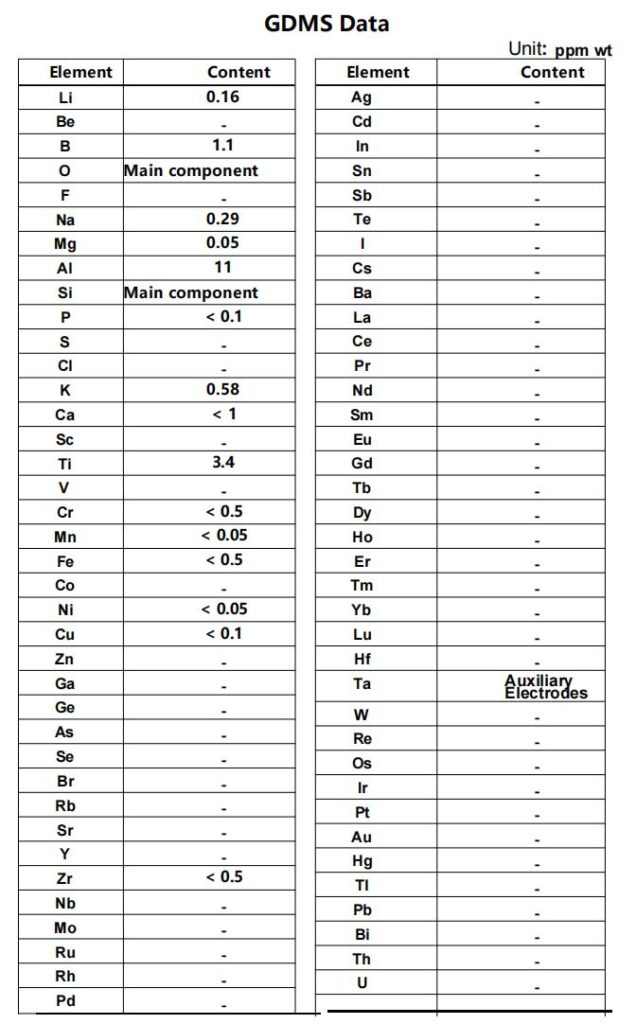
High-purity raw materials such as SiCl₄ are oxidized at high temperature to form extremely fine SiO₂ particles. These particles are then deposited onto a substrate or inside a quartz tube and fused into a completely solid, bubble-free, impurity-free, and highly uniform fused silica preform.
Why it matters:
This method allows control of purity, density, and refractive-index uniformity at the molecular level. A preform with perfectly uniform composition and structure is the essential starting point for pulling a product with consistent dimensions.
Precision Drawing System: Extreme Control of the Core Process
This is the “main battlefield” of tolerance control. The entire drawing system is a highly automated precision tower that maintains real-time, closed-loop control over multiple parameters.
1. Extremely Uniform Thermal Field
The system uses highly stable, high-precision laser heaters or resistance furnaces.
Temperature fluctuation inside the furnace must be controlled within ±1°C or even less.
A stable thermal field ensures the quartz glass is stretched at a perfectly consistent viscosity and flow behavior—this is the physical basis of diameter uniformity. Any temperature fluctuation will directly cause diameter deviations.
2. Synchronized Control of Feed and Drawing Speed
- Feed speed: The speed at which the preform is fed into the hot zone.
- Drawing speed: The speed at which the winding mechanism pulls the tube downward.
Both speeds must maintain a constant and precisely controlled ratio. With servo motors and real-time feedback, the system stabilizes drawing speed. Faster drawing produces a thinner tube; even slight fluctuations will immediately reflect in diameter change.
3. Real-Time Non-Contact Diameter Measurement and Feedback
This is the core of the closed-loop system.
A high-precision laser micrometer is installed at a specific point on the tower, measuring the tube’s outer diameter thousands of times per second.
Measurement data is fed instantly into the central control system. If the measured diameter deviates from the target value (for example: target 125 μm, measured 125.5 μm), the system adjusts drawing speed or furnace power within milliseconds to restore the correct diameter.
4. Precise Internal Gas-Pressure Control (Critical for Hollow Capillary Tubes)
For capillaries requiring precise inner-diameter control, an inert gas is injected into the tube and maintained at a stable internal pressure.
The pressure difference between the inner cavity and external air determines the inner diameter when the glass softens. Pressure control must reach Pascal-level precision.
Through pressure control, inner-diameter and outer-diameter control can be effectively decoupled, enabling independent precision control of the ID.
Environmental Stability and Material Preparation
- The drawing tower is placed on an anti-vibration base.
- The environment is kept at constant temperature and humidity.
- Airflow and vibration interference must be eliminated.
- The preform rod’s outer diameter and concentricity are ground and inspected before entering the tower.
100% Online Inspection and Strict Screening
Even with all the controls above, micro-scale variations still occur.
- Full-process monitoring: Tension, defects, and other parameters are continuously monitored.
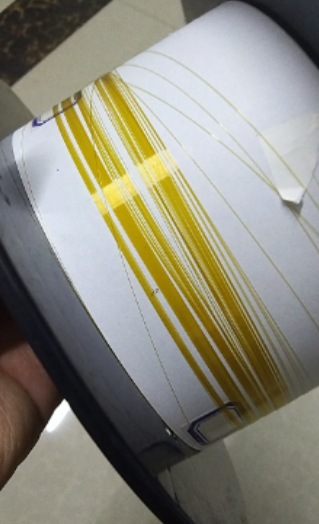
- Final screening: Long continuous tubes wound on reels are inspected again using high-precision offline measuring systems.
Only products meeting the strictest “fiber-optic-grade” tolerance range are approved for critical applications.
Achievable Tolerance Levels
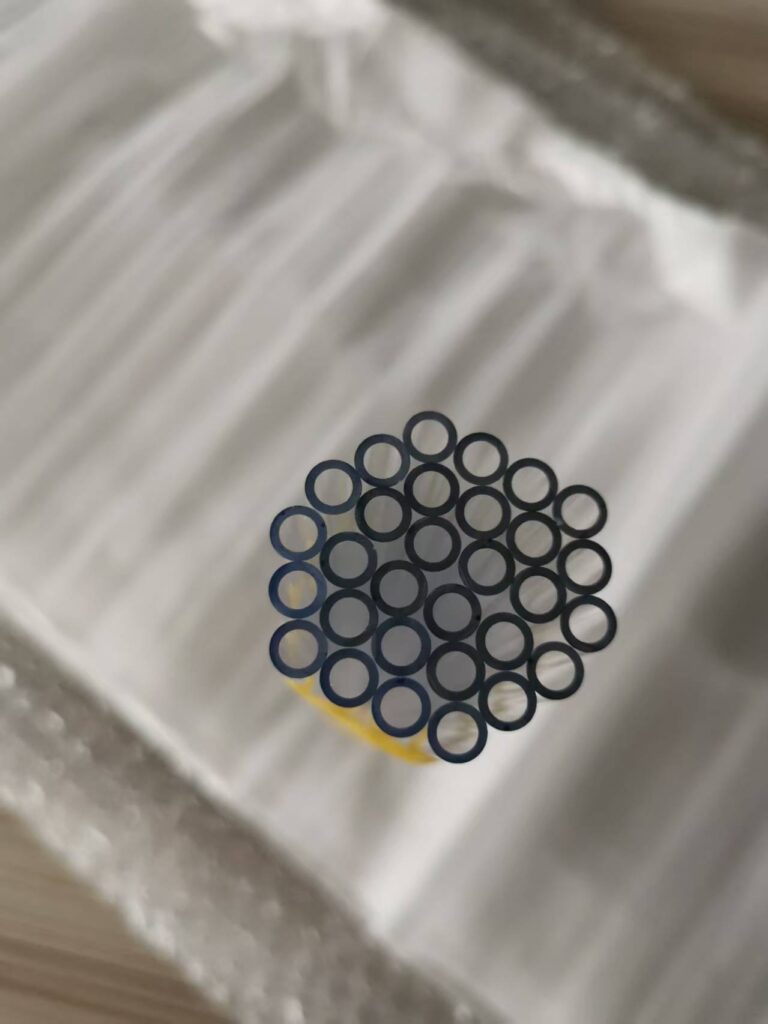
Fiber-optic-grade capillary quartz tubes can achieve astonishing precision. For example, fiber-optic protective capillaries:
- Outer diameter tolerance: typically within ±1 μm
(e.g., standard fiber OD 125 μm → required tolerance 125 ± 1 μm) - Wall-thickness / concentricity tolerance:
Inner-outer circle deviation typically < 0.5 μm, critical for optical transmission.
Summary
The tolerance control of fiber-optic-grade capillary quartz tubes is a highly integrated engineering system combining:
- top-tier material technology (vapor deposition),
- ultra-precision electromechanical systems (drawing tower),
- real-time algorithmic feedback (closed-loop control), and
- extreme environmental stability.
It is not a single technique but a comprehensive technological ecosystem that represents the advanced manufacturing capabilities of a nation.
 English
  German
  Russian
  French
  Spanish
  Italian