
Below is a comprehensive and practical guideline for using quartz tubes in CVD furnaces. It covers the entire process from installation and operation to maintenance. Quartz tubes are the core component of a CVD system and also a consumable part. Proper handling greatly extends their service life and ensures experimental safety and repeatability.
Safety First: Core Principles
Quartz tubes are primarily composed of silicon dioxide (SiO₂), essentially a type of glass. Their key characteristics include high-temperature resistance, high purity, brittleness, and poor resistance to mechanical and thermal shock. All operations must follow these material characteristics.
II. Installation and Removal
Gentle Handling
When handling by hand, always wear clean gloves (nitrile or cotton). Oil from hands carbonizes at high temperatures, leaving stains that are difficult to remove and may become weak points where uneven heating causes tube failure.
Avoid any collision or scratching between the quartz tube and hard objects such as metal parts, tabletops, or the furnace body.
Correct Installation of O-Rings and Seals
Ensure the O-rings and sealing grooves are clean and dust-free before inserting the quartz tube into the furnace flange.
Apply a uniform layer of high-vacuum grease onto the O-ring. This lubricates the O-ring during installation and enhances the sealing performance while preventing the O-ring from sticking to the quartz tube at high temperatures.
Align the quartz tube to the center and insert slowly and straight to avoid jamming or squeezing, which may twist or cut the O-ring.
Evenly Tighten the Clamps
When using symmetrical dual clamps, tighten the screws gradually and evenly in a “diagonal” pattern. Tightening one side all at once creates asymmetric stress that can cause the quartz tube to crack.
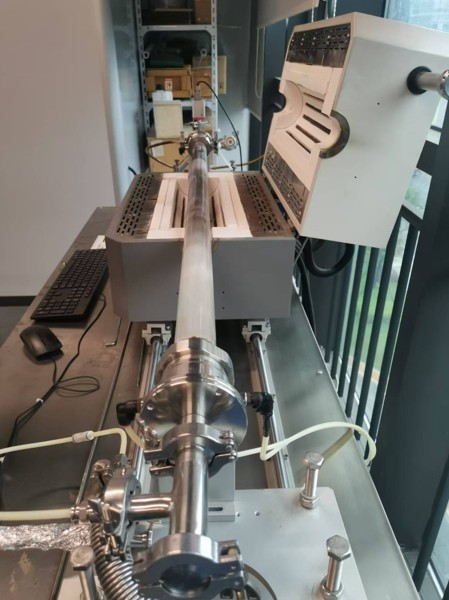
III. Heating and Cooling
This is the stage where quartz tubes most frequently break. The key is to control the rate.
Slow Heating
Always set a controlled heating rate in the program. For large tubes or tubes holding substantial sample loads, a rate of 5–10 °C/min or lower is recommended.
Rapid heating creates large temperature differences between the inner and outer walls, causing thermal stress from uneven expansion and contraction, which leads to thermal shock cracking.
Slow Cooling
Even more critical! Never open the furnace or force air cooling while at high temperatures.
Always use the program-controlled cooling of the furnace. A cooling rate of 3–8 °C/min or lower is recommended, and the furnace should only be opened once the temperature has dropped below 200°C.
Allowing the tube to naturally cool to low temperatures is the safest practice. Quick cooling due to impatience in retrieving samples is the most common cause of quartz tube explosion.
IV. Atmosphere and Process Conditions
1. Atmospheric Restrictions (Very Important!)
- Strictly avoid alkali metals: Never use quartz tubes in processes involving sodium (Na), potassium (K), or their compounds. They severely corrode quartz.
(SiO₂ + 2NaOH → Na₂SiO₃ + H₂O) - Use caution with fluorides: Hydrofluoric acid (HF), fluorine gas (F₂), and other fluorides react with quartz at high temperatures and etch the tube wall.
- Hydrogen usage notes:
Hydrogen atmospheres are commonly used, but at high temperatures hydrogen penetrates the quartz wall, causing devitrification over time (turning opaque, white, and brittle). This is normal aging. Regular inspection is required.
2. Pressure Control
Maintain balance between internal and external pressure. Avoid situations where the internal pressure is much higher or lower than atmospheric pressure while the quartz tube is at high temperature.
If a high vacuum is required, always evacuate before heating to prevent trapped air from expanding and causing overpressure.
3. Sample Loading
Samples and boats should not directly touch the inner wall of the quartz tube. Leave gaps to ensure airflow and temperature uniformity.
Avoid sample fusion or sticking to the quartz at high temperatures. A sacrificial sheet or suitable crucible can be placed between the sample boat and the tube.
V. Cleaning and Maintenance
Routine Cleaning
After each experiment and once the furnace is fully cooled, gently wipe the inner wall with a lint-free cloth and ethanol or acetone to remove volatile residues.
For stubborn organic residues, place the quartz tube in a muffle furnace at ~500°C for several hours to ash the organics. Then remove the leftover particles using compressed air or a vacuum.
Chemical Cleaning (For Metal/Oxide Deposits)
Note: Must be performed in a fume hood with full protective equipment (gloves and goggles).
Option 1 (Common):
Use diluted hydrofluoric acid (HF, such as 5%) or BOE (Buffered Oxide Etchant) for dipping or wiping.
HF is extremely dangerous and aggressively attacks quartz, so exposure time must be short (seconds to a few minutes). Rinse thoroughly with deionized water afterward.
This removes silicides and oxide films.
Option 2 (Safer):
Use aqua regia (1:3 mixture of concentrated nitric acid and hydrochloric acid) for soaking or cleaning.
Aqua regia dissolves most metal residues (gold, platinum, etc.).
Rinse thoroughly after use.
Regular Inspection
Before each installation, inspect the quartz tube carefully under light for microcracks, scratches, or thinning areas.
Use a flashlight to check if the interior surface is smooth.
If any defect is found, stop using the tube immediately and replace it. Damaged quartz tubes can explode unexpectedly during the next heating cycle and are extremely dangerous.
Following these recommendations will extend the service life of your quartz tubes, ensure safe and reliable operation, and maintain stable and repeatable experimental results.

 English
  German
  Russian
  French
  Spanish
  Italian